Reality of Placement Training at CMR Engineering College: My 4-Years Experience

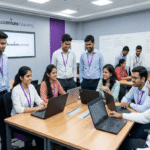
I joined CMR Engineering College in the 2020-2024 batch during the pandemic. As a result, all our classes, including the Training & Placement (T&P) introduction, were conducted online. During this session, we were introduced to Internshala for internships, and some programming classes were conducted.

After the pandemic, when we returned to campus, we attended common training sessions on programming and aptitude. While we were eager to learn, many of us struggled to grasp the teaching methods. The goal was to secure a job, but without understanding the real world purpose of the codes, the learning impact remained low.
Structured Training & Smart Interviews
To improve the training, the T&P department introduced different sections based on skill levels, including:
– Smart Interviews (Advanced Coding Program)
– Python Full Stack Development
– Java Full Stack Development

The Smart Interviews program was considered the most advanced, requiring students to solve coding problems on HackerRank. Selection was based on scores, and at first, I tried to perform sincerely. However, as I struggled to understand, my scores dropped, leading to copying or printing system outputs just to qualify. Many classmates did the same, assuming that getting selected in Smart Interviews would guarantee a job.
Even after being selected, I still couldn’t grasp the concepts. The training focused heavily on writing more and more codes, which became overwhelming. Eventually, due to my poor performance, I was shifted to a lower section, which I felt was justified. I struggled to solve even a single coding problem on my own. Whenever I managed to execute one, I would remember it for a week but then forget everything, returning to zero progress.

T&P Efforts vs. Student Grasping
One thing that must be acknowledged is that the T&P department put in tremendous effort to provide quality training. The problem was not with their efforts, but with how students grasped the concepts. The gap between teaching and understanding was significant, leading to low learning outcomes. Additionally, this was a tough time for job hiring, with limited job opportunities and high competition. The training was focused on quantity rather than quality, meaning students were exposed to a lot of content, but without depth. The key takeaway is that identifying a student’s strength in a specific domain and encouraging them in that area would have been a better approach.
Third-Year Full-Time Training
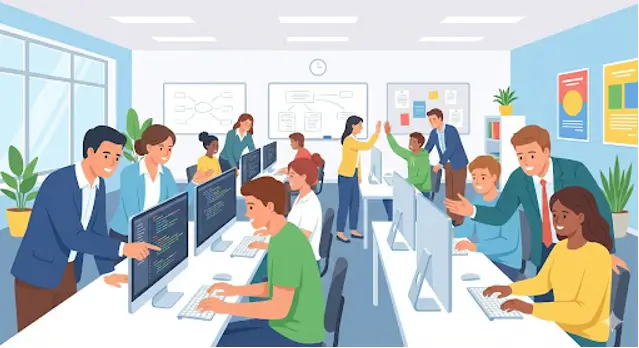
As we entered our third year, full-time training sessions were introduced. The classes ran from 9 AM to 4 PM, and attendance was strictly monitored. If a student was absent, they had to pay a fine—a system that felt unfair because those who could afford it could skip whenever they wanted, while others were forced to attend.
Despite these full-day classes, most students were not engaged:
– Some played games on their laptops
– Some worked on their personal projects
– Some just chatted
– Only a few actually listened

The main issue was that there was no curiosity to learn because we did not understand the real-world purpose of coding. It felt like a never-ending cycle of classes without impact, making most students feel frustrated and disinterested.
Personal Monitoring & Student Guidance
Rather than pushing students into general training, the T&P department should have individually monitored each student based on their performance. Instead of forcing everyone to fit into the same learning structure, they should have:
– Identified individual strengths and placed students accordingly
– Encouraged students based on what they were good at
– Provided guidance for weaker students rather than just shifting them to a lower section.
Campus Placement Process & Selection
During placements, students were selected based on their scores in Hacker Rank, Leet Code and attendance records—not their GitHub profile or resume. This felt strange and unfair because resumes and project portfolios are a major part of real-world hiring.
Another major difference when compared to our seniors was the placement attempt limit. Previous batches were allowed to attend multiple company drives and secure more than one offer letter. But in our 2020–2024 batch, once a student got placed in a company, they were no longer allowed to participate in further drives. This rule was mainly implemented due to high competition and limited job opportunities in the market. The supply of candidates was huge, but the demand was low. As a result, many students who got placed early missed better opportunities later, while others kept waiting for their first chance.
As the campus recruitment process started, the selection was based on different factors:
– Some students got placed purely on merit
– Some requested faculty to consider them, which sometimes worked
– Some relied on communication skills rather than technical knowledge
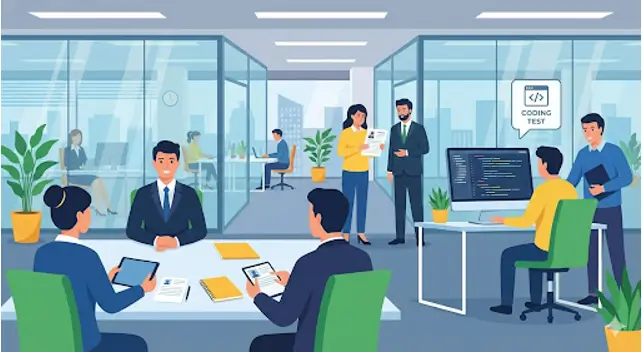
While there was nothing wrong with requesting faculty for opportunities, it created an unfair advantage for those with good relations with faculty, rather than focusing on skills.
Issues with Company Selections
Several companies conducted lengthy hiring processes (12-14 hours), but some were misleading. For example:
– Sutherland selected students but later rejected them.
– USDC conducted exams and interviews but never provided offer letters.
– Cheating was common during online exams, making test scores unreliable.

However, Technical (TR) and HR interviews were genuine, and students who performed well in those rounds had a fair chance.
Final Thoughts
In the end, about 40% of students were placed, while the rest had to explore other opportunities. Despite months of training, many students felt unprepared due to the lack of proper learning impact.
To improve the program, the T&P department should:
- Focus on practical learning rather than forcing coding tasks
- Provide personal mentorship to weaker students
- Encourage real-world project building (GitHub, portfolio reviews)
- Ensure fair selection processes without favoritism
- Improve engagement methods to make students genuinely interested in coding
- Identify and support students based on their domain strengths

While the T&P department made a great effort, the student grasping did not match their efforts. The biggest challenge was that the training was focused on volume rather than depth, making it difficult for students to retain knowledge. Additionally, job hiring was scarce, making the competition even tougher.
The best approach for the future would be to find each student’s strengths and encourage them in that specific domain instead of applying the same training to everyone.